
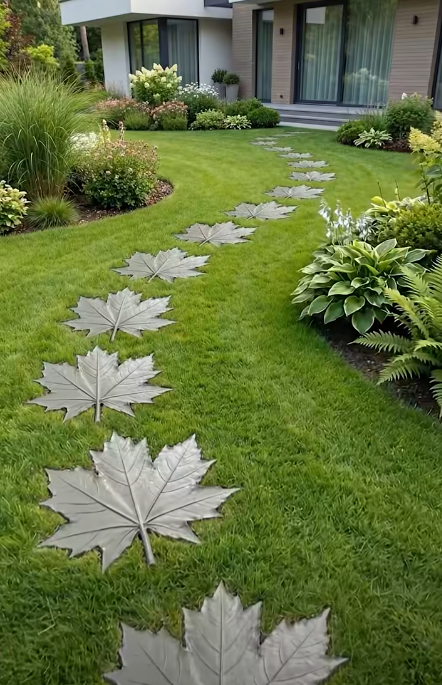
Creating a garden path that feels like it grew right out of the ground is easier than you think. By using real leaves as a mold, you capture every intricate vein and detail in solid stone.
Materials Needed
- Concrete Mix: A high-strength countertop or sand mix works best for fine details.
- Large Leaves: Rhubarb, Burdock, or large Maple leaves (like in the video) work perfectly.
- Cooking Spray or Mineral Oil: To act as a release agent.
- A Large Bucket & Water: For mixing.
- Trowel or Spatula: For smoothing.
- Gloves & Safety Glasses: Concrete is alkaline and can irritate skin/eyes.
Step 1: Prep the Ground
Instead of casting these in a workshop and moving them, you can cast them right where they will live.
- Dig a shallow circular hole (about 2-3 inches deep) in your lawn where you want the stepping stone.
- Ensure the bottom is level and packed down firmly.
Step 2: Mix the Concrete
- Mix your concrete in a bucket until it reaches a “peanut butter” consistency. It should be thick enough to hold its shape but wet enough to pour.
- Pro Tip: If you want a darker, more industrial look, you can add charcoal liquid cement pigment to the mix.
Step 3: The Pour & Level
- Pour the concrete into your prepared hole until it is flush with the ground level.
- Use your trowel (or your boots, as seen in the video!) to level the surface. You want it smooth so the leaf sits flat.
Step 4: Creating the Impression
- The Release Agent: Lightly coat the “vein side” (the underside) of your leaf with cooking spray. This ensures the leaf peels off cleanly later.
- The Press: Lay the leaf veiny-side down onto the wet concrete.
- The Detail: Gently press the leaf into the surface, ensuring every edge and the center stem make firm contact. Use your fingers to trace the veins to ensure the impression is deep.
Step 5: Curing & Finishing
- Leave the leaf on the concrete for 24 hours.
- Once the concrete has hardened, peel the leaf back to reveal the fossil-like texture.
- Use a small trowel or a stiff brush to clean up any “flashing” (excess concrete) around the edges of the leaf shape.